How to Choose the Right Private Therapist in London (And Avoid Wasting Time and Money)

Last updated: 12th June 2026
Finding a private therapist in London is not difficult. Finding the right one is. There are thousands of practitioners in the city, dozens of therapy types, and no shortage of directories that list them all without helping you tell the difference between them. Most people end up choosing based on proximity, price, or a profile photo, and then wonder why it did not quite click.
That is not a small problem. Research consistently shows that the quality of the therapeutic relationship accounts for up to 80% of therapy outcomes - more than any specific method or modality. Which means the question is not really "should I do CBT or psychodynamic therapy?" It is "how do I find someone I can actually work with?"
The good news: you do not need to get lucky. There are clear, practical things you can check before you spend a penny, and green flags you can look for before you commit to a course of sessions.
This guide covers all of it: what private therapy in London actually costs, how to check credentials, how to assess fit, what your first session should feel like, and the mistakes most people make that cost them time and money.
Why People Are Choosing Private Therapy in London Right Now
Demand for private therapy in the UK has risen sharply. NHS mental health referrals reached 5.2 million in 2024, up 37.9% since 2019, and waiting times in many London boroughs for talking therapies run to several months. For many people, the NHS simply cannot move at the pace their situation requires.
Private therapy fills that gap, but it is not just a stopgap. It offers things that stretched NHS services rarely can:
Continuity - the same therapist, session after session, building a relationship over time
Flexibility - evening and weekend appointments, in-person or online, on your schedule
Specialism - access to therapists with focused expertise in areas like trauma, ADHD, eating disorders, or addiction
Choice - the ability to find someone whose approach, background, and personality actually suits you
The BACP's 2025 Public Perceptions Survey found that demand for private therapy services rose by 30% in the UK over the past year, with cost and access remaining the two biggest barriers. London's private therapy market reflects both: higher quality and greater choice, but also higher prices and more noise to cut through.
"High and variable costs create confusion; London premiums from rent and demand make budgeting hard, especially compared to NHS waits." - Kick's Therapy, 2026 Therapy Costs Guide
What Does a Private Therapist in London Actually Cost?
Cost is the question most people type into Google first and find the least useful answers to. Here is what the London market actually looks like in 2026.
London Pricing by Experience Level
Therapist Type | Typical Rate per Session |
Trainee / student therapist | Free to £35 |
Newly qualified (0-3 years) | £40 to £65 |
Established practitioner (3+ years) | £70 to £110 |
Senior specialist | £100 to £150 |
Clinical psychologist | £100 to £180 |
Couples therapy | £160 to £180 |
Harley Street / premium central London | £150 to £250+ |
London rates run 15 to 25% above the UK national average of £60 to £80 per session, driven by higher rents, greater demand, and the concentration of specialist practitioners in central areas.
What Drives the Price Difference?
A few factors explain why two therapists with similar qualifications might charge very differently:
Location - a consulting room in Fitzrovia or Marylebone costs more to run than one in Lewisham or Walthamstow, and some of that overhead is passed on
Specialisation - therapists with advanced training in trauma, eating disorders, or ADHD often charge at the higher end of their band
Insurance affiliation - some therapists accept private health insurance (Aviva, Vitality, Cigna, WPA, AXA), which can reduce or eliminate your out-of-pocket cost
The sweet spot for quality without the premium postcode markup is roughly £80 to £110 for an established London practitioner. Below that, you are likely looking at a trainee or newly qualified therapist, which is not necessarily a problem - but it is worth knowing.
A number of London practices also offer concession rates or lower-cost slots for people who cannot afford standard fees. It is always worth asking.
How to Check Whether a Therapist Is Properly Qualified
In the UK, the title "therapist" or "counsellor" is not legally protected. Anyone can use it. That makes accreditation checks non-negotiable before you book.
The Main Accrediting Bodies to Know
BACP (British Association for Counselling and Psychotherapy) - the largest professional body in the UK; accredited members have met rigorous training, supervision, and ethical standards
HCPC (Health and Care Professions Council) - the statutory regulator for clinical and counselling psychologists; registration here is legally protected
UKCP (UK Council for Psychotherapy) - covers psychotherapists and psychotherapeutic counsellors
NCPS (National Counselling and Psychotherapy Society) - a recognised accrediting body for counsellors and psychotherapists
How to Verify in Under Two Minutes
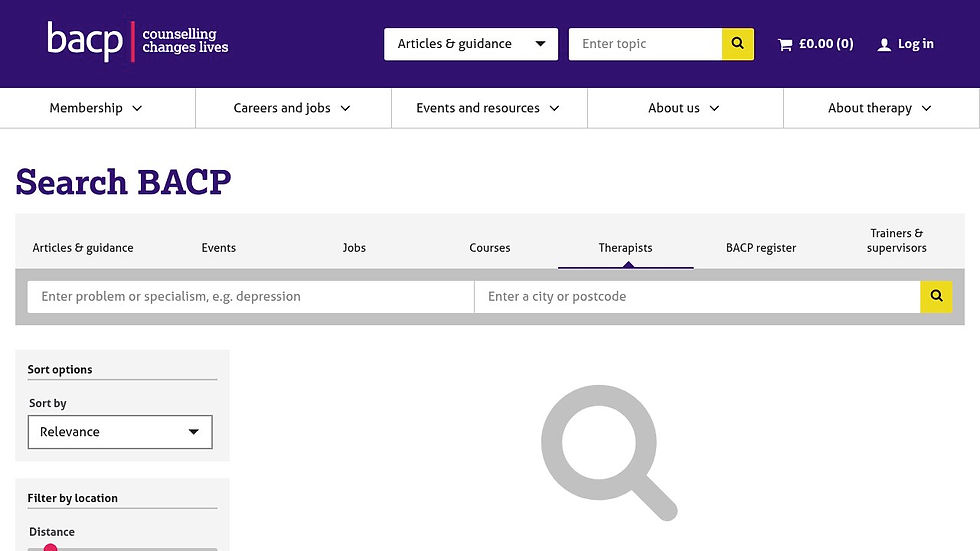
Most accrediting bodies have a public register you can search by name. For BACP, use the BACP Therapist Directory. For HCPC, check the HCPC Register. For NCPS, use the NCPS Find a Therapist tool.
If a therapist's name does not appear in any register, ask them directly which body they are accredited with and how to verify it. A confident, transparent answer is a green flag. Hesitation or vagueness is not.
Accreditation is a floor, not a ceiling. It tells you the therapist meets minimum professional standards. It does not tell you whether they are the right fit for you - that requires a different kind of assessment.
How to Assess Fit Before You Commit
This is the step most people skip, and it is the most important one. A therapist can be fully accredited, and experienced, and still not be the right person for you. Fit is personal, and the only way to assess it is through direct contact.
Use the Introductory Call
Most private therapists in London offer a free 15 to 30 minute introductory call before any commitment. Use it. This is not a formality - it is your primary data point.
During that call, pay attention to:
Do you feel heard? Not just listened to, but understood. Does the therapist reflect back what you have said accurately?
Is there warmth without performance? Genuine warmth feels different from rehearsed reassurance. Trust your instinct here.
Are they curious about you specifically? Good therapists ask questions that go beyond the presenting issue.
Do they explain their approach clearly? You should leave the call with a rough sense of how they work and why.
Does the practical side feel manageable? Location, scheduling, cancellation policy, and fees should all be clear before you agree to anything.
Red Flags Worth Knowing
Promises of a specific outcome or timeline ("I can fix this in six sessions")
Reluctance to discuss their qualifications or accreditation
Pressure to commit to a long block of sessions upfront
A profile that lists every possible specialisation with no clear focus
Seventy percent of clients cite the therapeutic relationship as the most important factor in their decision to continue therapy, according to Psychology Today. If the introductory call does not feel right, that is useful information, not a failure. Move on.
What to Expect From Your First Session
A first therapy session is not therapy in the traditional sense. It is an assessment - for both of you.
Your therapist will typically ask about what brought you in, your background, what you have tried before, and what you are hoping to get from the work. You will not be expected to have neat answers. You are not being judged on how clearly you can articulate your problems.
What a good first session may feel like:
You leave with a slightly clearer sense of what you want to work on, even if you could not name it before
The therapist has explained, at least broadly, how they tend to work
There is an agreed next step, whether that is booking a second session or taking time to think
You feel neither overwhelmed nor patronised
What it does not have to feel like:
An immediate emotional breakthrough
Total comfort (some discomfort is normal when talking about difficult things for the first time)
Certainty that this is the right person
"The therapeutic relationship is at the heart of progress. It takes time to build, and the first session is the beginning of that, not the proof of it." - BACP
Give it two or three sessions before drawing firm conclusions. The relationship builds over time. But if something feels consistently off after three sessions, trust that signal.
The Most Common Mistakes People Make When Choosing a Therapist
Most people approach finding a therapist the same way they approach finding a plumber: check reviews, compare prices, pick the one with the best rating. That approach works for plumbers. For therapy, it misses the point almost entirely.
Here are the mistakes worth avoiding:
Choosing on price alone. The cheapest option is not always a trainee, but it often is. That is not a problem if you know what you are getting. It becomes a problem when you expect specialist-level experience at entry-level rates.
Choosing on method rather than person. "I need CBT" is a common starting point. But the evidence is clear: the relationship predicts outcomes far more reliably than the modality. A skilled integrative therapist who is the right fit will outperform a technically correct CBT practitioner who is not.
Skipping the introductory call. Some people book a first paid session without speaking to the therapist first. This is the equivalent of signing a lease without viewing the flat.
Mistaking a polished website for quality. Marketing and clinical skill are unrelated. A beautifully designed profile says nothing about what happens in the room.
Staying too long with the wrong person. Sunk cost thinking is real in therapy. If something feels wrong after several sessions, the answer is not to keep going and hope it improves. Switching is not failure - it is good self-advocacy.
Not asking about insurance. If you have private health insurance through work or personally, your policy may cover therapy sessions. It takes one phone call to your insurer to find out, and it could save you hundreds, if not thousands, of pounds.
Ready to Take the Next Step?
Choosing the right therapist takes a little more thought than most people expect, but it does not have to be complicated. Check credentials, use the introductory call, trust your instinct, and do not let price be the only filter.
If you are looking for a private therapist in London with specialist experience in anxiety, trauma, ADHD, eating disorders, or addiction, I offer a free 15-30 minute introductory call with no obligation to proceed. Sessions are available in-person in Fitzrovia, Central London, and online.
To find out about the way I work, click here, or book your free introductory call and find out whether it feels like the right fit. That is exactly what the call is for.
FAQs
Q: How much does private therapy cost in London?
A: Most established private therapists in London charge about £70 to £110 per session. Newly qualified therapists are often lower, while premium central London practices can cost £150 or more. Online sessions are usually cheaper than in-person appointments.
Q: How do I know if a therapist is properly qualified?
A: Check whether they are registered with a recognised body such as BACP, HCPC, UKCP, or NCPS. Use the public register to confirm their name and status, and ask directly if anything is unclear. A transparent answer is a good sign.
Q: What matters more, the therapy method or the therapist?
A: The therapist usually matters more. Research consistently shows that the therapeutic relationship is one of the strongest predictors of outcome. A good fit with a skilled therapist often matters more than choosing a specific modality first.
Q: Should I use a free introductory call?
A: Yes. A short call is one of the best ways to assess fit before paying for a full session. Use it to ask about their experience, approach, fees, cancellation policy, and whether they feel warm, clear, and easy to talk to.
Q: What should I expect from a first therapy session?
A: Expect an assessment, not an instant breakthrough. Your therapist will usually ask what brought you in, what you have tried before, and what you want help with. You should leave with a clearer sense of whether the arrangement feels right.
